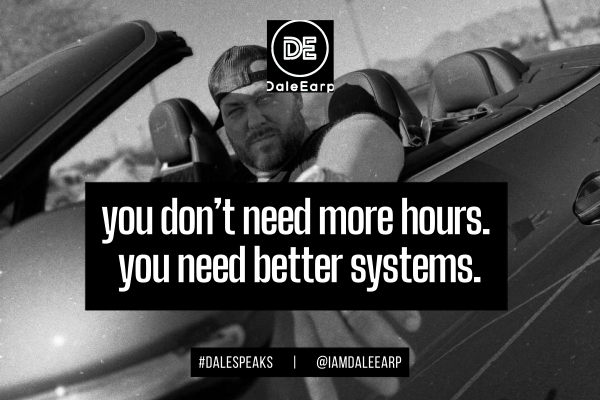
Successful Businesses Run on Systems, Not Memory
If you've ever caught yourself saying, "I'll remember that later," there's a good chance you've already uncovered one of the biggest obstacles to growing your business.
I know I did.
There was a time when I took pride in keeping everything in my head. I knew every client, every project, every follow-up, and every conversation without needing to check a CRM or open a task list. It made me feel prepared, involved, and in control. For a while, I even believed that was one of my greatest strengths.
But as the businesses grew, something changed. More customers meant more conversations. More employees meant more decisions. More opportunities meant more moving pieces. I wasn't becoming a better leader—I was simply becoming the person everyone depended on.
That's when I realized something that completely changed the way I operate.
My memory wasn't scaling. The business was.
Eventually, every growing company reaches a point where success begins exposing the cracks in its foundation. The question is no longer whether you can remember one more task or squeeze another meeting into your calendar. The real question becomes whether your business can continue moving forward without relying on what's inside your head. That's the difference between a company that's growing and one that's simply getting busier.
One lesson has shaped almost every business I've built, and it's surprisingly simple.
Every repeated task is trying to become a system.
Take a look at your own week. How many times did you answer the same customer question? Walk a new employee through the same process? Search your inbox for an email you've already written before? Maybe you rewrote a proposal from scratch even though you've sent dozens just like it.
Most entrepreneurs accept those moments as part of running a business. Builders see them differently. Every repeated task is a signal that there's an opportunity to create a process, document it, and stop solving the same problem over and over again.
Systems capture your best thinking once so you don't have to recreate it every day. They reduce friction, eliminate unnecessary decisions, and give your team clarity instead of confusion.
People often ask what separates businesses that scale from businesses that stay stuck. Many assume it's motivation, discipline, or simply working harder.
I don't think that's true.
Motivation is helpful, but it's unreliable. Some mornings you'll wake up energized and ready to take on the world. Other days you'll feel distracted, tired, or overwhelmed before your first meeting even starts. If your business only performs when you feel motivated, you're building on unstable ground.
Systems don't care how you feel. They create consistency on your best days and your worst days. They allow your business to continue delivering a great experience whether you're full of energy or taking a much-needed day off.
That's why successful companies aren't built on willpower alone. They're built on habits, documented processes, and repeatable standards that keep everything moving even when life gets busy.
One thing I underestimated early in my entrepreneurial journey was how exhausting decision-making could become.
At first, every decision feels important. Which client should you call first? How should you respond to that email? Who owns this project? What happens next?
Individually, those decisions seem small. Together, they create mental fatigue.
By the end of the day, many entrepreneurs aren't physically exhausted—they're mentally drained because they've spent hours making decisions that should have already been made by a system.
That's one of the biggest advantages of building processes. Instead of asking, "What should we do?" every time something happens, your team already knows the answer because the framework is in place.
Clarity removes hesitation.
And when hesitation disappears, momentum follows.
One misconception I hear all the time is that systems make businesses feel robotic. In my experience, the opposite is true.
Good systems don't replace people. They empower them. When expectations are clear, people become more confident. They don't have to guess what success looks like because the process already exists. Instead of waiting for approval on every little decision, they can take ownership, solve problems, and move projects forward without constantly looking over their shoulder.
That's when leadership begins to multiply.
Your goal shouldn't be to build a team that constantly needs you. Your goal should be to build a team that's confident enough to keep moving when you're not in the room.
This philosophy is exactly why we created Connect and AI Infinity. For years I watched entrepreneurs keep everything in scattered places—important customer conversations in text messages, project updates buried in email threads, follow-ups written on sticky notes, and appointments spread across different calendars. Every day started with trying to remember where everything was before they could even begin working.
That's not a leadership problem. It's a systems problem.
Connect brings communication, customer relationships, follow-ups, calendars, and workflows into one place so your business isn't dependent on one person's memory. AI Infinity takes it even further by automating repetitive tasks that consume valuable time, allowing leaders to focus on strategy, relationships, and growth instead of administrative work.
Technology should never replace leadership. It should create the space for leaders to lead.
Here's something I'd encourage you to do over the next few days. Keep a simple notebook beside your desk. Every time you catch yourself repeating a task, answering the same question, or looking for information you've searched for before, write it down.
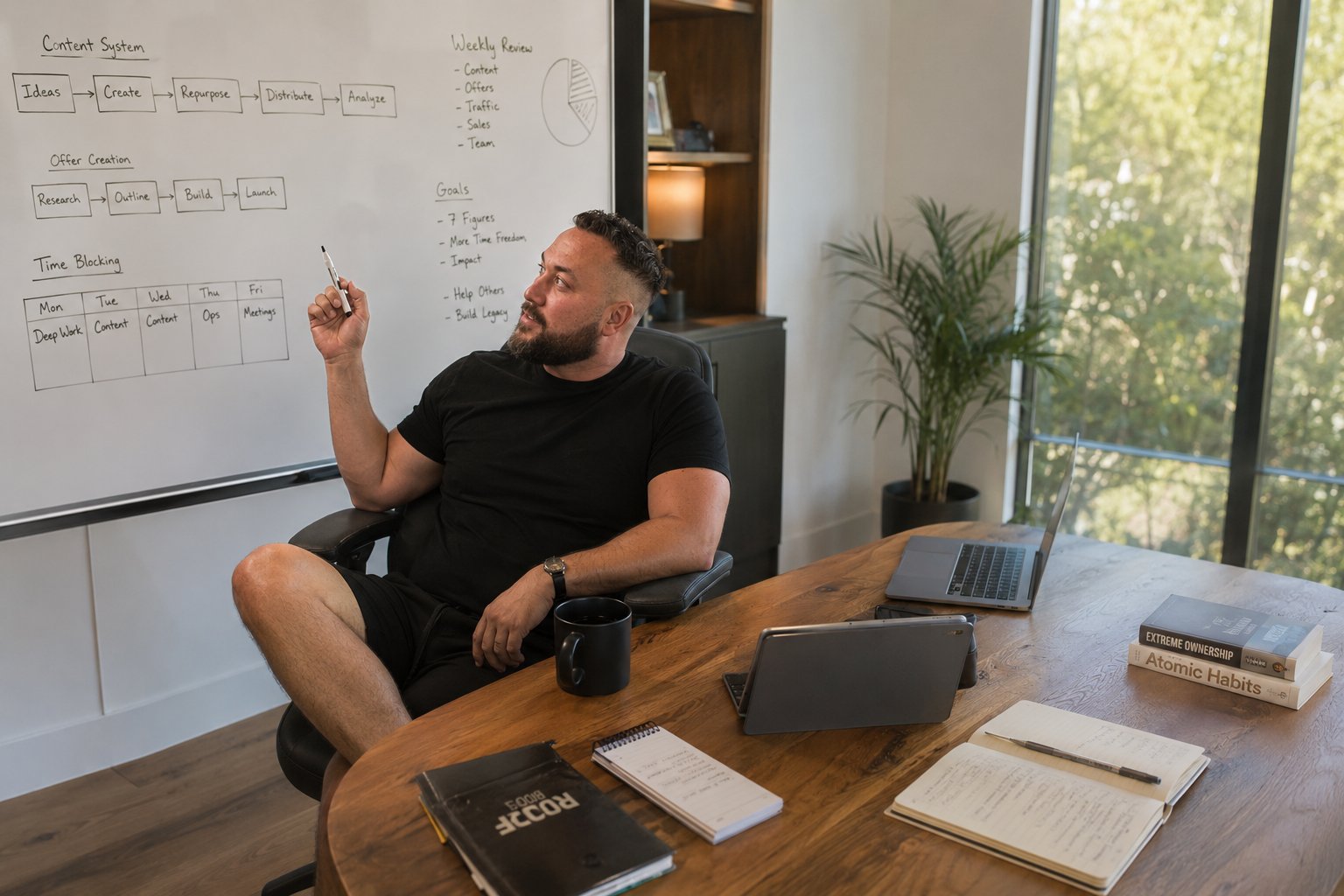
Don't try to fix everything immediately. Just notice the patterns.
By the end of the week, you'll have a list of systems your business has been asking you to build. Pick one. Document it. Improve it. Teach it to someone else.
Then repeat the process.
Small systems may not feel exciting in the moment, but over time they become the infrastructure that supports sustainable growth.
Freedom doesn't magically appear once your business reaches a certain revenue number.
It's built intentionally through structure, clarity, and consistency.
Every documented process, every automated workflow, and every empowered team member moves you one step further away from being the bottleneck and one step closer to building a business that can truly scale. The businesses that last aren't the ones with founders who remember everything.
They're the ones with systems that allow everyone to do their best work—even when the founder isn't in the room. That's the kind of business I'm interested in building.
Because real freedom isn't about working less.
It's about building something strong enough to keep moving without depending on you every single day.
Legacy doesn't build itself.
Want to go deeper? Read this next:


