From Friend to Partner: Your Strategic Mentorship Blueprint for Accountability
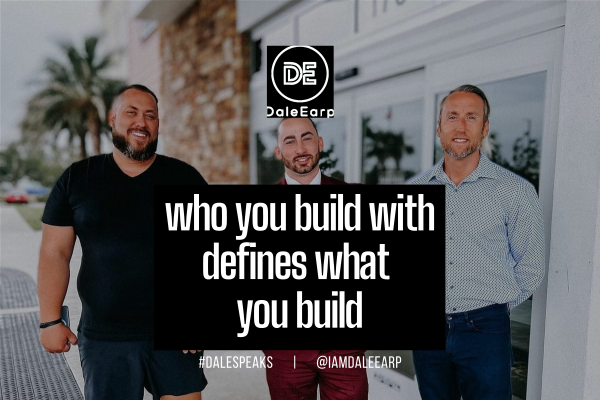
"Your circle is your blueprint for the future. Treat it like a strategic asset, not a social club." - Dale Earp
Let’s be honest: your current circle is probably too soft. They might cheer for you, but do they actually hold you to the blueprint? Do they call you out when your execution slips? If the answer is no, they are friends, not partners. You need to transition from an accidental network to a carefully engineered, high-impact system.
I’m the No-BS Mentor. I teach entrepreneurs that success has a structure. And that structure requires entrepreneur accountability partners. This is how you use your network as an investment in your Legacy Building Framework.

The Mentorship Investment: Why Reciprocity is Non-Negotiable
Many entrepreneurs treat mentorship like a one-way street—they want to extract knowledge without putting in the work. That's a leech. I don’t waste time. I invest it. A high-value partnership requires mutual discipline and grit.
The Equal Exchange: When seeking a mentor or accountability partner, ask yourself: What high-value asset, knowledge, or connection can I bring to the table? The relationship must be strategic for both parties to sustain the high level of commitment required.
The Partnership Mandate: This isn't a social hour. Meetings must be focused, structured, and centered on execution. Convert chaos into structure instantly by preparing clear goals, defined obstacles, and specific requests for input.
The Accountability Contract: Defining Your Execution Standards
Accountability is the system that ensures you stick to the Strategic Mentorship Blueprint. It’s the constant, firm check against your comfort zone.
Set the Hard Lines: Your entrepreneur accountability partners must agree to certain non-negotiables: no excuses, brutal honesty, and mandatory reporting on key daily execution habits.
Review the Structure: Don't just review outcomes (Did you hit the number?). Review the structure (Did you stick to the process?). If you failed, it’s usually a breakdown in the system, not a lack of effort. Your partner’s job is to help you fix the machine, not just critique the output.
The Strategic Filter: Auditing Your Space for Growth
Before you can build, you must clear the weeds. Use the business circle audit framework to filter your relationships through the lens of Legacy Building.
The Multiplier Effect: Prioritize relationships with Multipliers—those who push you, challenge your assumptions, and have already achieved what you’re aiming for.
The No-BS Cut: If someone drains your energy, encourages mediocrity, or wastes your time, they are a liability to your legacy. Cut the cord. You must hold space for the right people, and protect that space.
Your circle is your blueprint for the future. Treat it like a strategic asset, not a social club.
No excuses. Let’s go.
Want to go deeper? Read this next. Grit is the Blueprint: The Underdog Mindset for Business Success


